

Container Gardening for Beginners: Big Results with Minimal Effort
Container gardening is one of the most beginner-friendly ways to grow your own food and flowers. No large yard required, no complicated setup, no guesswork about soil conditions. With the right containers, a simple watering routine, and a few quality tools, you can grow a surprising amount in a very small space. This guide covers everything you need to get started and actually succeed.
Why Container Gardening Works So Well for Beginners
Traditional in-ground gardening comes with a long list of variables: soil quality, drainage, weeds, pests, and the sheer scale of maintaining a large bed. Container gardening removes most of those variables at once. You control the soil from the start. Weeds are almost a non-issue. You can move things around. And if something goes wrong with one container, it does not affect everything else.
The learning curve is also much shorter. A beginner who starts with a vertical planter and a few containers will develop an intuitive sense of watering, light, and plant needs within a single season. That knowledge transfers directly to any garden setting later on.
Start small and expand. One or two well-maintained containers will teach you more than ten neglected ones. Master the basics with a vertical planter and a handful of herbs or salad greens before adding more. Success early keeps you motivated.
The 6 Essentials for Container Gardening Success
A Vertical Planter — The Smartest Container for Small Spaces
The single biggest upgrade a beginner container gardener can make is switching from a collection of individual pots to a vertical planter system. Instead of managing ten separate containers with ten separate watering schedules, a vertical planter concentrates everything into one column you can tend in a single pass.
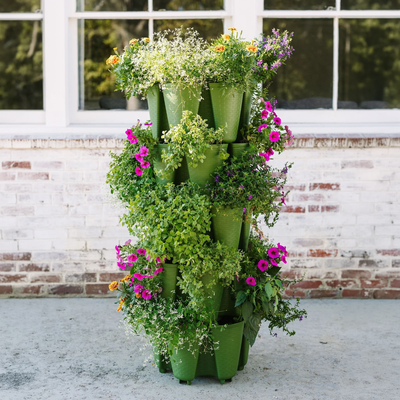
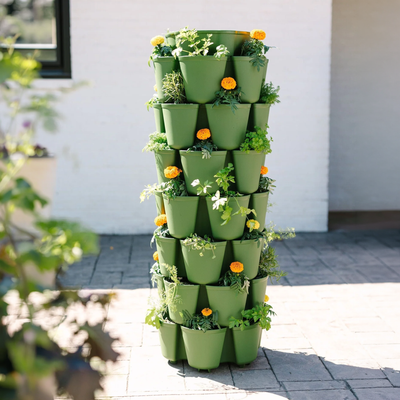
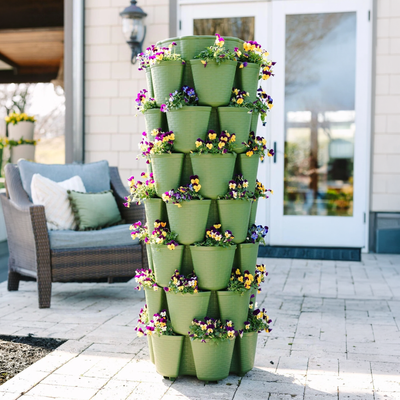
The GreenStalk Vertical Planters are the best example of this done right. Each tier has its own planting pocket, and the central reservoir distributes water evenly from the top down so every pocket gets moisture in one watering. Available in 3, 5, and 7 tier configurations to match any space, from a small balcony to a full patio.
- Grow herbs, strawberries, lettuce, flowers, and more in one footprint
- Central watering reservoir feeds every tier in a single pour
- Optional caster bases let you move the planter without disassembly
- 3 tier for compact spaces, 5 or 7 tier for maximum output
- Available in multiple colors and two texture options
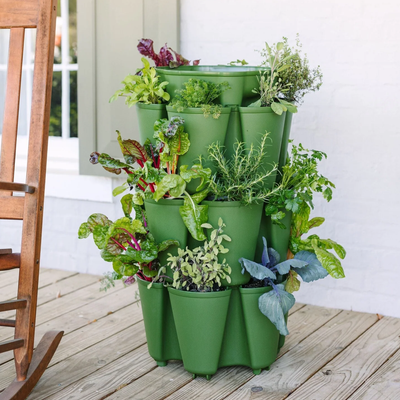
3, 5, and 7 tier options in Basic and Basket Weave textures. Multiple colors. Optional mover bases. Find the right size for your space.
Shop CollectionThe Right Soil Mix — The Foundation Everything Else Depends On
The single most common beginner mistake in container gardening is using garden soil in containers. Garden soil compacts, drains poorly, and can introduce pests and disease. Container plants need a lightweight, well-draining potting mix that stays loose enough for roots to spread and water to move through freely.
Beyond the base potting mix, adding organic matter like Worm Castings at planting time gives your containers a slow-release nutrient foundation that feeds plants gently for weeks. Unlike synthetic fertilizers, worm castings will not burn roots and improve soil structure at the same time.
- Always use potting mix in containers, not garden soil
- Add 10 to 20% worm castings by volume at planting time
- Worm castings improve drainage, aeration, and moisture retention simultaneously
- Safe for all container crops including edibles and herbs
- No risk of root burn, unlike granular synthetic fertilizers

A Simple Fertilizing System — Feed Your Plants Without the Guesswork
Container plants need more frequent feeding than in-ground plants because nutrients wash out with every watering. But beginners often either forget to fertilize or over-apply liquid fertilizers that can burn roots. The simplest solution is a slow-release tablet that does the work for you.
Grotab Fertilizer Tablets are pushed directly into the soil near the root zone and release nutrients gradually over weeks. One application per container, done at planting or at the start of the season, covers your feeding needs without any measuring, mixing, or schedules.
- Push into soil once and feed for weeks without repeat applications
- Eliminates the risk of over-fertilizing with liquid feeds
- Works in all container types including vertical planters
- Ideal for vegetables, herbs, flowers, and fruiting crops
- Beginner-friendly: no measuring or mixing required

The best beginner setup: mix worm castings into your potting mix at planting, then push a Grotab tablet into each container. The castings handle the first few weeks, and the tablet takes over from there. You will not need to think about feeding again for the rest of the season.
A Reliable Watering Can and Sprayer — Precision Watering That Does Not Damage Plants
Watering containers correctly matters more than most beginners expect. Too much water sitting in the base of a pot causes root rot. Too little and the soil pulls away from the sides of the container, letting water run straight through without reaching roots. Having the right tool makes consistent watering much easier.
The Cleo Watering Can and Sprayer Set is a two-in-one tool that handles both tasks. The watering can delivers a controlled pour for established plants and containers, while the sprayer is ideal for seedlings, herbs, and anything that needs a gentler touch. Compact, well-balanced, and available in several colors.
- Two-in-one: watering can and fine mist sprayer in one set
- Controlled pour reduces overwatering in small containers
- Fine mist sprayer is ideal for seedlings and delicate herbs
- Compact size is easy to use on balconies and patios
- Available in multiple color options

A Precision Hand Weeder — For the Few Weeds That Do Show Up
Weeds in containers are far less of a problem than in garden beds, but they do appear, especially if your potting mix has been exposed to open air or you are top-dressing with outdoor compost. When they do show up, you want a tool that removes them cleanly without disturbing the roots of your plants.
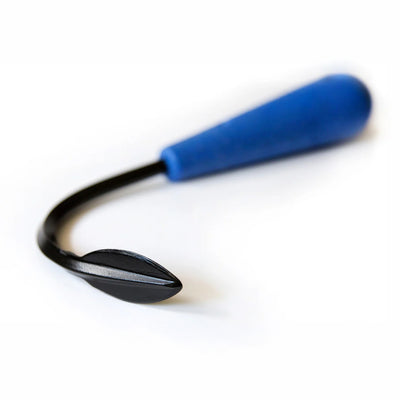
The CobraHead Mini Weeder and Cultivator is the ideal container tool. Its narrow curved blade fits between closely spaced plants, gets under tap-rooted weeds to remove them whole, and doubles as a soil loosener when your container soil starts to compact between waterings. At 4.5 oz, it lives in your pocket.
- Narrow blade fits between container plants without damage
- Removes tap-rooted weeds cleanly in a single motion
- Loosens compacted container soil to improve drainage
- 4.5 oz and 8.75" long, light enough to carry constantly
- Tempered forged steel blade, made in the USA
Choosing the Right Planter Size — Match Your Ambitions to Your Space
One of the most common beginner mistakes is choosing a planter that is too small for what they want to grow. Small containers dry out fast, restrict root development, and need more frequent fertilizing. Bigger is almost always better in container gardening, within the practical limits of your space and budget.
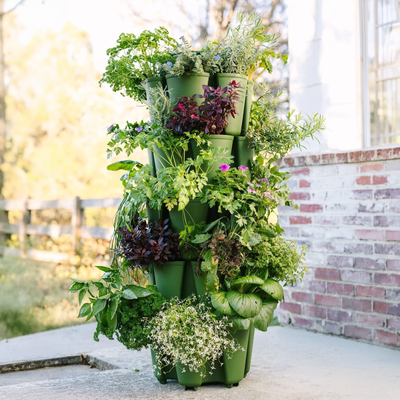
The GreenStalk range gives you a scalable answer to this problem. Start with the 3 Tier for a compact beginner setup, step up to the 5 Tier for a serious herb and salad garden, or go all the way to the 7 Tier for maximum output in the same footprint. All tiers use the same central watering system and are available in Basic or Basket Weave textures.
- 3 Tier: ideal for beginners and small balconies
- 5 Tier: strong mid-range option for herbs, strawberries, and greens
- 7 Tier: maximum growing capacity, up to 28 plants in one column
- Both Original and Leaf designs available across all tier counts
- Optional mover bases available for all sizes
Quick Reference: Container Gardening Essentials
| Product | Best For | Price | Link | |
|---|---|---|---|---|
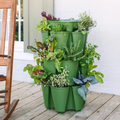 |
3 Tier GreenStalk Vertical Planter | Beginners and small balconies | $129.00 | Shop |
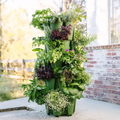 |
5 Tier GreenStalk Vertical Planter | Herbs, greens, strawberries | $159.00 | Shop |
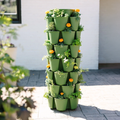 |
7 Tier GreenStalk Vertical Planter | Maximum output, up to 28 plants | $189.00 | Shop |
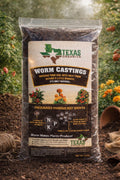 |
Worm Castings | Soil amendment at planting | $16.99 | Shop |
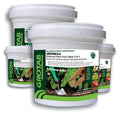 |
Grotab Fertilizer Tablets | Season-long container feeding | $12.99 | Shop |
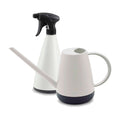 |
Cleo Watering Can and Sprayer Set | Precise container watering | $29.99 | Shop |
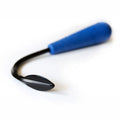 |
CobraHead Mini Weeder | Weeding and soil loosening in containers | $34.00 | Shop |
What to Grow in Containers as a Beginner
The best beginner container crops share three traits: they grow quickly (so you see results fast), they tolerate some variation in watering (so one missed day does not ruin everything), and they work well in the compact root space of a container.
Herbs are the easiest starting point. Basil, parsley, chives, mint (keep mint in its own container), and thyme all thrive in vertical planters and require minimal care once established. They reward you with harvests within weeks of planting and can be cut repeatedly without replanting.
Salad greens are the second-best beginner crop. Lettuce, spinach, and arugula germinate quickly, grow fast, tolerate partial shade, and can be harvested as cut-and-come-again crops for months. A single GreenStalk tier planted with mixed salad greens will keep a household in salad all season.
Strawberries are the best fruiting crop for vertical planters. Their shallow roots are perfectly suited to the pocket-style tiers of a GreenStalk planter, and they spread naturally to fill available space. Plant once and they will produce for multiple seasons.
Herbs (basil, chives, parsley, thyme), salad greens (lettuce, spinach, arugula), strawberries, and compact flowers like marigolds or nasturtiums. Avoid large root vegetables like carrots or crops that need trellising in a vertical planter pocket.
Common Beginner Mistakes and How to Avoid Them
Using garden soil in containers. It compacts, drains poorly, and introduces pests. Always use a bagged potting mix.
Choosing containers that are too small. Small containers dry out faster and restrict root growth. When in doubt, go one size up. A 3 Tier GreenStalk is a much better starting point than a single small pot for herbs.
Inconsistent watering. Containers dry out faster than garden beds. Check your containers daily in warm weather and water when the top inch of soil is dry. A watering can with a controlled pour makes this much easier to get right.
Skipping fertilizer. Container soil loses nutrients quickly through watering. Grotab tablets at planting and worm castings mixed into the soil at the start of the season will cover your nutrition needs without any ongoing effort.
Placing containers in too little light. Most edible crops need at least 6 hours of direct sun per day. Herbs and salad greens can manage with 4 hours. Position your planter in the sunniest spot available and use a mover base if you need flexibility to track the sun.
The GreenStalk Planter Range at a Glance
The GreenStalk range covers every container gardening scenario from a first-time balcony grower to a serious patio producer. Here is the full lineup available at Lazy Leaf:
Frequently Asked Questions
A vertical planter like the GreenStalk 3 Tier is the easiest starting point. It concentrates your growing space into one manageable column, reduces weeding, and lets you water everything in one pass. It is forgiving, space-efficient, and works on any patio or balcony.
Always use a quality potting mix, not garden soil. Garden soil compacts in containers and drains poorly. Add worm castings to your mix for slow-release nutrients and improved moisture retention. For longer-term feeding, push a Grotab fertilizer tablet into each container at planting.
Most container plants need watering when the top inch of soil feels dry. Containers dry out faster than garden beds, especially in summer. The Cleo Watering Can and Sprayer Set gives you control for both gentle watering of seedlings and targeted pouring for established plants. In hot weather, daily watering may be needed.
Lettuce, herbs, radishes, cherry tomatoes, and bush beans are all excellent container crops. Lettuce and herbs are the easiest starting point as they grow quickly, tolerate partial shade, and can be harvested repeatedly. Avoid large vining crops like pumpkins or full-size tomatoes in small containers.
Yes, more than in-ground plants. Container soil loses nutrients faster because of regular watering. Grotab fertilizer tablets are ideal for beginners as you simply push them into the soil and they feed your plants slowly over weeks. Worm castings mixed into your potting soil at planting time also provide a gentle long-term nutrient boost.
Absolutely. Vertical planters are specifically designed for small spaces. A GreenStalk 7 Tier planter grows up to 28 plants in roughly the same footprint as a single large pot. For balconies, use lightweight potting mix, ensure your balcony can handle the weight when watered, and position planters where they get at least 6 hours of light.
Weeds in containers are rare if you use bagged potting mix rather than garden soil. For any that do appear, the CobraHead Mini Weeder removes them cleanly without disturbing surrounding plants. Its narrow curved blade is perfectly sized for container work.
Vertical planters let you grow many plants in a fraction of the horizontal space, and all maintenance happens in one spot. The GreenStalk design includes a central watering reservoir that distributes water evenly to each tier, so you water once from the top and every pocket gets moisture. Optional caster bases let you move the whole planter without disassembly.
Ready to Start Your Container Garden?
Everything you need is at Lazy Leaf. Curated for quality, chosen by gardeners who actually use them. Free shipping on US orders over $100.
Share